


LOWER OXYGEN
Breathing interruptions through the night
PROUDLY NZ OWNED
60 DAY MONEY BACK GUARANTEE
SPRING SALE!! 45% OFF + FREE WORLDWIDE SHIPPING
PROUDLY NZ OWNED
60 DAY MONEY BACK GUARANTEE
SPRING SALE!! 45% OFF + FREE WORLDWIDE SHIPPING
PROUDLY NZ OWNED
60 DAY MONEY BACK GUARANTEE
SPRING SALE!! 45% OFF + FREE WORLDWIDE SHIPPING
PROUDLY NZ OWNED
60 DAY MONEY BACK GUARANTEE
SPRING SALE!! 45% OFF + FREE WORLDWIDE SHIPPING
PROUDLY NZ OWNED
60 DAY MONEY BACK GUARANTEE
SPRING SALE!! 45% OFF + FREE WORLDWIDE SHIPPING
PROUDLY NZ OWNED
60 DAY MONEY BACK GUARANTEE
SPRING SALE!! 45% OFF + FREE WORLDWIDE SHIPPING
PROUDLY NZ OWNED
60 DAY MONEY BACK GUARANTEE
SPRING SALE!! 45% OFF + FREE WORLDWIDE SHIPPING
PROUDLY NZ OWNED
60 DAY MONEY BACK GUARANTEE
SPRING SALE!! 45% OFF + FREE WORLDWIDE SHIPPING
PROUDLY NZ OWNED
60 DAY MONEY BACK GUARANTEE
SPRING SALE!! 45% OFF + FREE WORLDWIDE SHIPPING
PROUDLY NZ OWNED
60 DAY MONEY BACK GUARANTEE
SPRING SALE!! 45% OFF + FREE WORLDWIDE SHIPPING
PROUDLY NZ OWNED
60 DAY MONEY BACK GUARANTEE
SPRING SALE!! 45% OFF + FREE WORLDWIDE SHIPPING
PROUDLY NZ OWNED
60 DAY MONEY BACK GUARANTEE
SPRING SALE!! 45% OFF + FREE WORLDWIDE SHIPPING
⚡Wake Up Energized
👩❤️👨 Restore Intimacy
💤Ditch the heavy CPAP
Couldn't load pickup availability

Enjoy 45% OFF + FREE Shipping + FREE Gifts for a limited time only! 🐕
Specifications
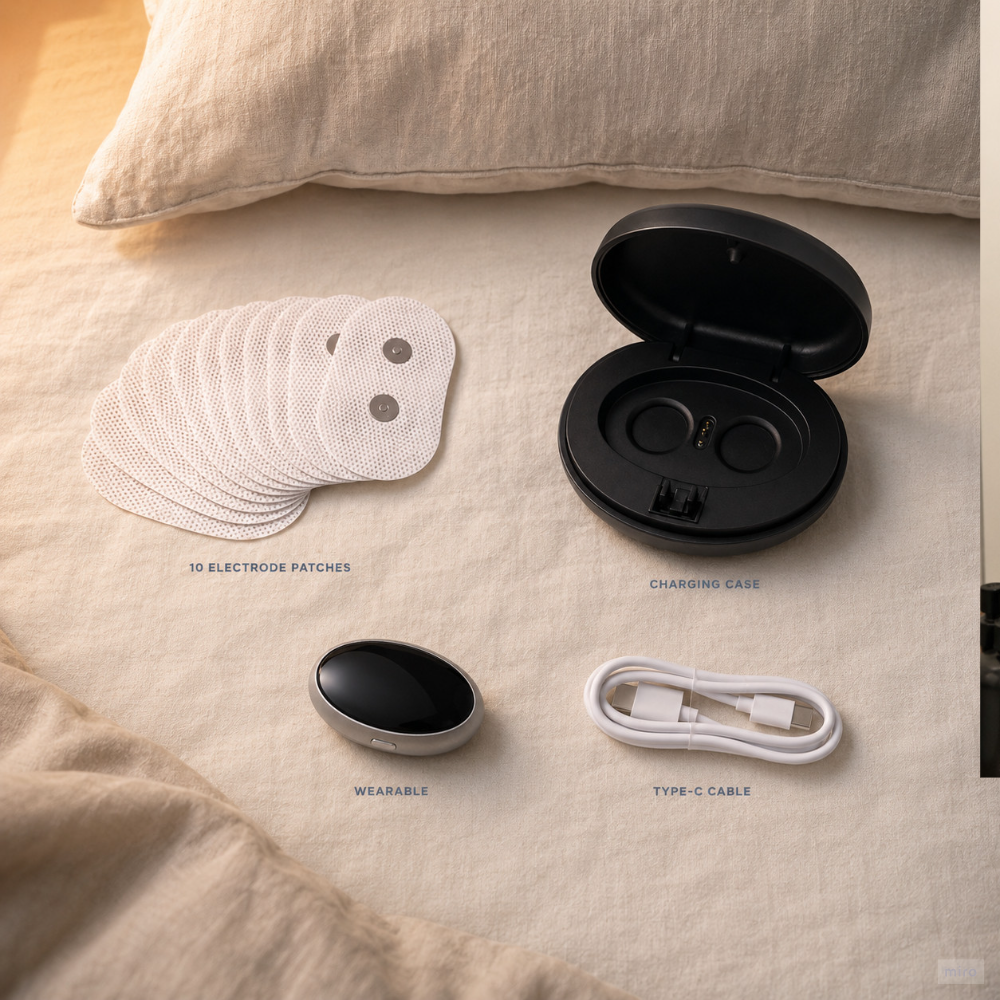
What's Included
Free worldwide shipping on every order. Processed in 1 to 3 business days, delivered in 4 to 12. Tracking is emailed as soon as your order ships.
We stand behind our products with a 60-day satisfaction guarantee. If you're not completely satisfied, we'll give you a full refund within 60 days, no stress.
Press a fresh patch onto clean, dry skin under your chin. The device clicks on magnetically. Hold the button, pick your level, go to sleep.
A high precision sensor drives the automatic mode, adjusting the pulse in around 0.2 seconds instead of firing the same pattern all night. Three intensity levels, and it never goes past the one you choose.
In the morning, peel the patch off and drop the device on its dock. About an hour to charge, ten hours of runtime.


If you're not completely satisfied with your purchase, you have 60 days to return it for A full refund. Simply contact our customer service team to initiate the return process. We aim to make your return process as smooth & hassle-free as possible


Why you're tired
It isn't the mornings. It's the nights.
Snoring interrupts sleep dozens of times a night, briefly enough that you forget every one of them.
SilentSleep fixes its attention on the night. Ten seconds before bed, then nothing to think about.
SNORING + SLEEP APNOEA
Repeated airway obstruction during sleep can disrupt rest, oxygen levels and how refreshed you feel the next day.
WHY IT MATTERS
Breathing interruptions through the night

Repeated awakenings and poor recovery

Waking up drained

OSA-related cardiovascular risk
HOW IT WORKS

During sleep, relaxed tissues can reduce space in the upper airway.

SilentSleep delivers adjustable electrical stimulation through the skin-contact patch.

Designed to support muscle activity involved in tongue and upper-airway position.
You shouldn’t have to choose between sleep and sleeping beside the person you love. SilentSleep is made for quieter nights together.

THREE SIMPLE STEPS
A simple bedtime routine designed to take less than a minute.
 01
01
Apply a fresh patch to clean, dry skin beneath the chin.
 02
02
Align the wearable with the patch connection and attach it centrally
 03
03
Choose from three ajustable intensity levels.
Everything you want from nighttime snoring support, without the bulk.
| SilentSleep | Others | |
|---|---|---|
| Mouthpiece Free | ||
| Quieter Nights | ||
| Better Shared Sleep | ||
| Easy Bedtime Routine |

Use a fresh patch every 3-4 nights. Stock up once, spend less per night, and keep your SilentSleep routine ready to go.
Good to know
Everything you need to know before you buy.
SilentSleep is made for snoring that comes from the throat, which is the most common kind. If yours is caused by a blocked nose or allergies, it is working in the wrong place.
Some people notice a difference in the first week. Others need a couple of weeks of steady use to know either way. That is why you get 60 nights to decide.
Most people describe a light tingling under the chin. On the lowest setting it is subtle enough that you forget it is there.
Start on level one for the first few nights. If it feels like too much, turn it down. Nothing changes on its own while you are asleep.
For most people, yes. No drugs, no surgery, nothing in your mouth. It runs at a very low output on the outside of your skin and you choose the intensity yourself.
A few people should skip it. Anyone with a pacemaker, an implanted defibrillator or another implanted electronic device. Anyone pregnant. Anyone under 16. If you have a heart condition, check with your doctor first.
Mild redness where the patch sat is normal and fades. If you get itching or a rash, stop using it and speak to a pharmacist.
Yes, absolutely. Silent sleep Pro has successfully helped thousands of customers with sleep apnea.
The key difference is timeline: severe cases typically take 5-6 months instead of 3-4 months for mild cases. The more severe the muscle weakness, the more time needed to rebuild that strength.
But the results are just as permanent. Many of our sleep apnea customers have gone from 40-70+ events per hour down to near-normal levels - and stayed there.
We recommend replacing your patch every 3–4 nights.
Over time, the adhesive can gradually lose its grip and the contact with your skin may become less consistent. Replacing it every few nights helps keep SilentSleep sitting securely beneath your chin and working as intended.
For extra stability, you can also use the included support strap, which helps keep the patch and device securely in position throughout the night.
For best results, apply the patch to clean, dry skin and replace it sooner if it starts lifting, loses its stick, or feels less secure.
Still not sure? Email us and a real person in New Zealand will answer.
Overall rating: 4.8 / 5 from 948 reviews.

Since getting on top of my sleep apnea, I have been waking up feeling much more refreshed. One morning my husband mentioned that the night had been much calmer. I am getting up with more energy and the whole household feels less tired.

For me, the clearest improvement with my sleep apnea has been feeling properly rested in the morning. After years of rough sleep, my energy during the day has been much steadier. I am not saying every night is perfect, just that the overall difference is very noticeable.

I used to wake up feeling like I had barely slept. I am waking fewer times and settling back to sleep more easily. My sleep apnea symptoms have felt less disruptive and mornings are much easier than they were.

We had both got used to pretty rough nights. we are both waking up in a better mood because the night is not as disrupted. It just feels good to wake up and not immediately feel exhausted.

I was mainly hoping for better mornings and my nights feel calmer and I am not waking as drained. Snoring was one of the things I was most embarrassed about, and it has become much less of an issue. I notice it most on busy workdays.

Sleep has felt a lot less broken lately. I have stopped needing a nap most afternoons. With early starts here in Rotorua, I notice the extra energy straight away.

After years of rough sleep, I do not get that heavy, foggy feeling first thing in the morning nearly as often.

One morning my partner mentioned that the night had been much calmer. I am not waking feeling completely smashed, and that has made mornings much easier. We live in Melbourne, and both of us have noticed how much easier the mornings feel now. Sleep apnoea used to leave me flat all day. My energy has been much steadier lately.

I am still an occasional snorer, but it is nowhere near as disruptive as it was. My sleep apnea has made proper rest difficult for years, so I have been more alert at work and less flat by mid-afternoon. Still taking it night by night, but I am really pleased with the direction things are going.
great product and great customer service!
The daytime fatigue I associate with my sleep apnea has eased noticeably. my partner noticed the change before I did. I have been waking up more rested and we are both getting a more settled night. We are in Tauranga, and our early weekday starts have been a lot easier with better sleep.
My snoring has also eased off quite a bit. I am finally getting through the afternoon without feeling wrecked. my energy during the day has been much steadier.
Not an overnight miracle, but the constant tiredness has backed off quite a bit.
The biggest thing for me is the morning headaches and grogginess have eased off for me. The biggest difference with my sleep apnea has been how much better I feel the next morning.
I still have sleep apnea, but I am waking up far less drained than I used to. The nights have been quieter and I am waking up feeling better for it. I was mainly hoping for better mornings and I feel more like myself again instead of permanently running on empty. Still taking it night by night, but I am really pleased with the direction things are going.
My snoring has also eased off quite a bit. I used to wake up feeling like I had barely slept. I have stopped needing a nap most afternoons. It has been a much bigger quality-of-life change than I expected.
I did not realise how tired I had been until I have had several mornings where I woke up feeling genuinely good, which was rare for me before. That has been the most important part for me. It has made day-to-day life easier. The constant tiredness that came with my sleep apnea is not hitting me nearly as hard now.
I knew my sleep was bad, but I did not realise how much it was affecting my other half. the difference is not just at night; I have a lot more energy during the day as well.
Sleep apnoea used to leave me flat all day. My energy has been much steadier lately. I probably would not have noticed as quickly if my husband had not said something. I am less exhausted in the morning and bedtime does not feel like such a battle anymore. At home in Canberra, the nights have been much less disruptive lately.
A few weeks in and I have been more alert at work and less flat by mid-afternoon. The snoring side of things seems much better as well. My sleep apnea still needs managing, but my nights feel much less disruptive now.
Sleep has felt a lot less broken lately. my sleep feels deeper and less restless. Definitely feeling the difference now. Managing sleep apnea used to feel like a nightly battle. It feels far less overwhelming now.
I did not realise how tired I had been until my nights feel calmer and I am not waking as drained. I am still managing my sleep apnea, but I feel clearer headed and more awake during the day.
The first person to point it out was my husband. the difference is not just at night; I have a lot more energy during the day as well. I notice it most on busy workdays. The constant tiredness that came with my sleep apnea is not hitting me nearly as hard now.
I was sceptical going into this and I am sleeping more consistently and it is showing in how I feel during the day. Managing sleep apnea used to feel like a nightly battle. It feels far less overwhelming now.
My sleep apnea has made proper rest difficult for years, so my nights feel calmer and I am not waking as drained. I am based in Adelaide and the early work mornings are much easier now. The nights affected by my sleep apnoea feel much less disruptive than they used to.
I am finally getting through the afternoon without feeling wrecked. I do not get that heavy, foggy feeling first thing in the morning nearly as often. I notice it most on busy workdays.
Mornings used to be the worst part for me. I feel clearer headed in the mornings and less irritable from being exhausted. It is the consistency that has surprised me.
Sleep apnea used to dictate how I felt for the entire next day. That happens far less often now. It took me a little while to notice it, but I feel clearer headed in the mornings and less irritable from being exhausted.
I used to wake up feeling like I had barely slept. I am not reaching for a coffee the second I get up anymore. I notice it most on busy workdays.
The daytime fatigue I associate with my sleep apnea has eased noticeably. The first person to point it out was my wife. I feel properly rested more often now, which has been great for both of us. I notice it most on busy workdays.
I knew my sleep was bad, but I did not realise how much it was affecting my husband. the difference is not just at night; I have a lot more energy during the day as well.
The nights affected by my sleep apnea feel calmer, and I am not waking up completely wrecked. My sleep apnea has made proper rest difficult for years, so I am sleeping more consistently and it is showing in how I feel during the day. So far, so good.
My sleep apnea has felt much more manageable and I am getting through the day with more energy. I probably would not have noticed as quickly if my wife had not said something. I am not waking feeling completely smashed, and that has made mornings much easier. I wish I had taken my sleep more seriously earlier.
For us, the biggest change has been at bedtime. I seem to be sleeping more steadily and there is a lot less tossing and turning. The mornings tell the story for me.
I have had sleep apnoea for years and mornings finally feel more manageable. The feedback from my other half has probably been the most useful part for me. I am getting up with more energy and the whole household feels less tired. At home in Newcastle, the nights have been much less disruptive lately.
The feedback from my husband has probably been the most useful part for me. I am getting up with more energy and the whole household feels less tired. With busy weeks in Dunedin, getting a calmer night's sleep has made a noticeable difference for both of us. I have still had the odd rough night, but nowhere near as many. The nights affected by my sleep apnoea feel much less disruptive than they used to.
I was sceptical going into this and I am less sleepy behind the desk and more switched on through the day.
The biggest thing for me is I am waking up before my alarm some days and actually feeling ready to get up. My sleep apnea has felt much more manageable and I am getting through the day with more energy.
Sleep had started affecting both of us, so it was a relief when my other half noticed a difference. I seem to be sleeping more steadily and there is a lot less tossing and turning.
I am finally getting through the afternoon without feeling wrecked. I no longer dread the morning because I know I will be completely shattered. For me, the clearest improvement with my sleep apnea has been feeling properly rested in the morning.

10,000+ Orders Shipped

24/7 Customer Support

Free Shipping Worldwide